Long-Term & Monthly Porta Potty Rental
For projects and properties that need restroom coverage for months, not days, monthly billing and a recurring service schedule keep things simple.
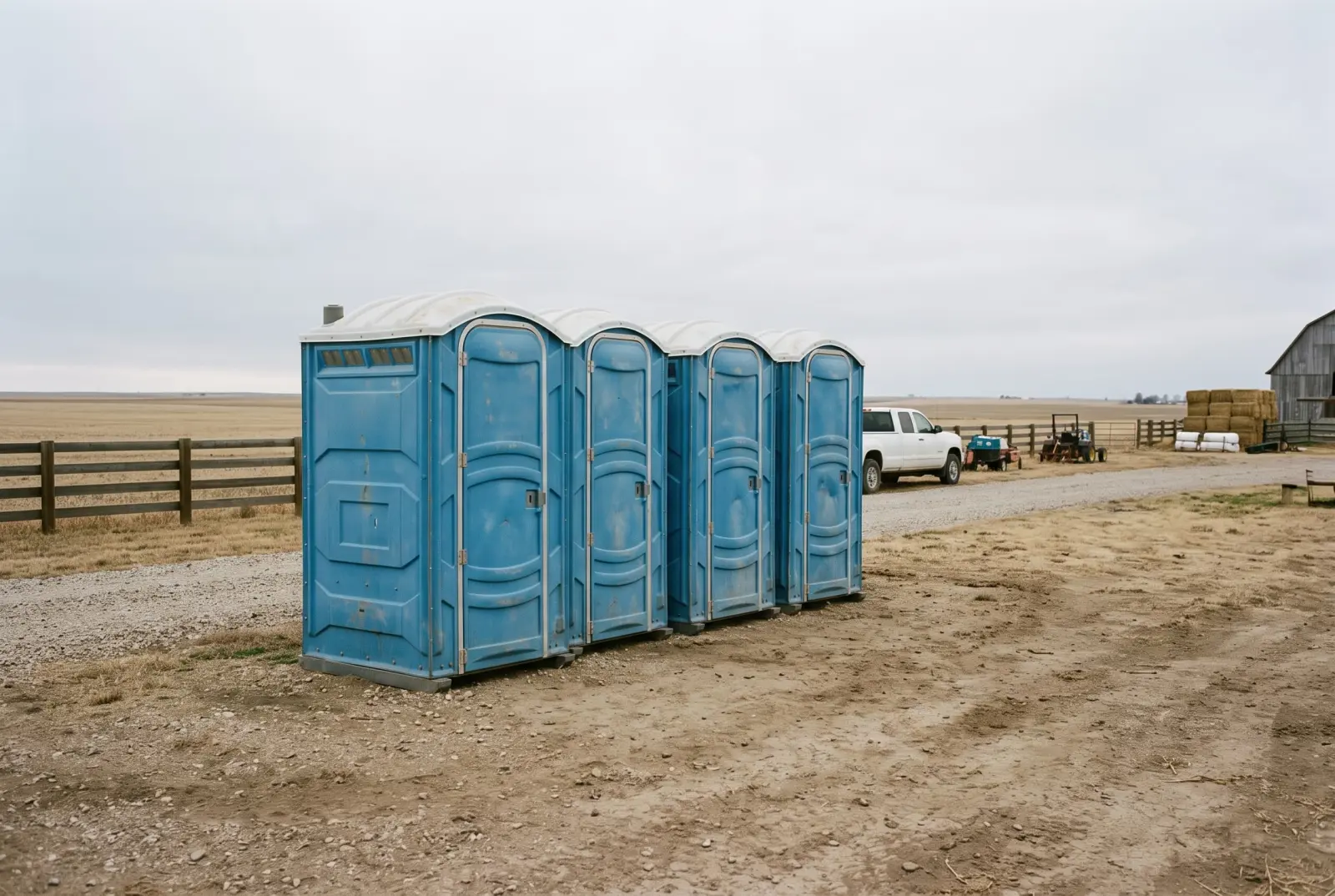
What Long-Term Rental Covers
Long-term and monthly rentals fit situations where a project or property needs restroom access for an extended stretch of time rather than a single event or short job. Common examples include:
- Extended construction or infrastructure projects running months rather than weeks
- Farms and agricultural operations with field crews spread across a property
- Parks, trailheads, and public spaces needing standing restroom access
- Remote work crews without access to permanent facilities
- Property owners covering a gap during a building renovation
Monthly Billing & Servicing Cadence
Rather than renewing a short-term rental every week or two, long-term rentals are billed on a monthly basis, with a servicing schedule built into that rate — typically weekly, though higher-use sites can move to a more frequent visit. This tends to be more cost-effective than repeatedly extending a short-term booking, and it gives you a predictable line item for budgeting a multi-month project.
Weatherproofing for Units Left Out Long-Term
Units on a long-term rental are built to hold up outdoors through changing conditions, but a few things matter more the longer a unit stays in place:
- Stable, level ground so wind or seasonal ground shifts don't tip or unlevel a unit
- Anchoring in high-wind areas or open, exposed sites like farms and fields
- Winterization options in colder climates to keep units usable through freezing temperatures
- Regular servicing to keep units functional through heavy or extended use
Swapping or Upgrading Mid-Rental
Needs change over the course of a multi-month rental — a crew grows, a farm's peak season ramps up, or you decide a deluxe unit makes more sense than a standard one. Most long-term rentals allow you to swap unit types or add units partway through; just give your provider notice so the change can be worked into your regular service visit rather than requiring a separate trip.
Pricing Factors
Long-term pricing generally comes down to unit count, unit type, servicing frequency, and total rental length, with monthly rates typically working out lower per-day than short-term pricing. See our pricing guide for more detail, and our construction rental page if your long-term need is an active job site.
A Typical Long-Term Request
Take a farm operator who needs restrooms for a seasonal harvest crew from early fall to the first hard freeze. The fields are down a gravel lane, the crew moves between two blocks, and there is no water on site. The operator contacts a provider with the location, the start window, an estimate of headcount, and a question about whether units can be moved partway through the season. A provider might propose a few units near the main work area, a hand wash station with its own tank, and a recurring service day. This is an illustrative scenario only, not a quote or a promise of terms.
Reviewing a Long Rental Over Time
A rental that lasts months is worth checking in on instead of leaving untouched. Every month or so, compare your unit count to the actual number of people using them, look at the condition of the ground under each unit, and confirm the service day still works for your schedule. If crews have grown or shrunk, say so, because a count that fit in week one may be wrong by week twelve. Keep any service confirmations your provider sends, since they help if there is ever a question about a missed visit.
Questions to Ask Your Provider
- Is there a minimum rental term, and what happens if the project ends early?
- How many service visits does the monthly rate include, and what does an extra visit involve?
- What are the terms for damage, vandalism, or a unit that goes missing?
- What winterization or freeze protection do you offer for cold months?
- Will I get a record or confirmation after each service visit?
- How much notice is needed to add, remove, or relocate units?
- Can units be anchored in windy, exposed locations?
Long-Term Rental FAQs
How is long-term porta potty rental billed?
Long-term rentals are typically billed monthly rather than by the day or week, with servicing frequency built into the monthly rate. This usually works out more cost-effective than repeatedly renewing a short-term rental for the same project.
Can units stay outside for a whole season?
Yes, units used for long-term rentals are built to sit outdoors for extended periods. In colder climates, ask about winterization options, and in all seasons make sure the unit has stable footing so wind or ground shifts don't affect it.
Can I swap or upgrade a unit partway through a long-term rental?
Yes, most providers can swap a unit for a different type or add additional units if your crew size, usage, or needs change during the rental. Let your provider know as early as possible so a swap can be scheduled around your regular service visit.
Is there a minimum length for a long-term rental?
Minimums depend on the provider and market. Some set a one-month minimum for monthly billing, others are more flexible. Ask before you commit so you know what you owe if the work ends sooner than planned.
What happens if my project ends early or runs long?
Ending early may involve a minimum billing period or a final pickup fee, depending on your agreement. Running long is usually handled by extending the term. Tell your provider as soon as you see the schedule slipping.
How do I know units are actually being serviced?
Ask whether the provider logs or confirms each visit. You can also set a simple routine, such as a weekly check by your site lead, and report any unit that looks overdue.
Does hot weather change how often units need service?
It can. Heavy use and high heat tend to make units less pleasant faster, so sites with large crews or summer conditions sometimes move to more frequent service. Raise it with your provider if units seem to fill quickly.