ADA Accessible Portable Toilet
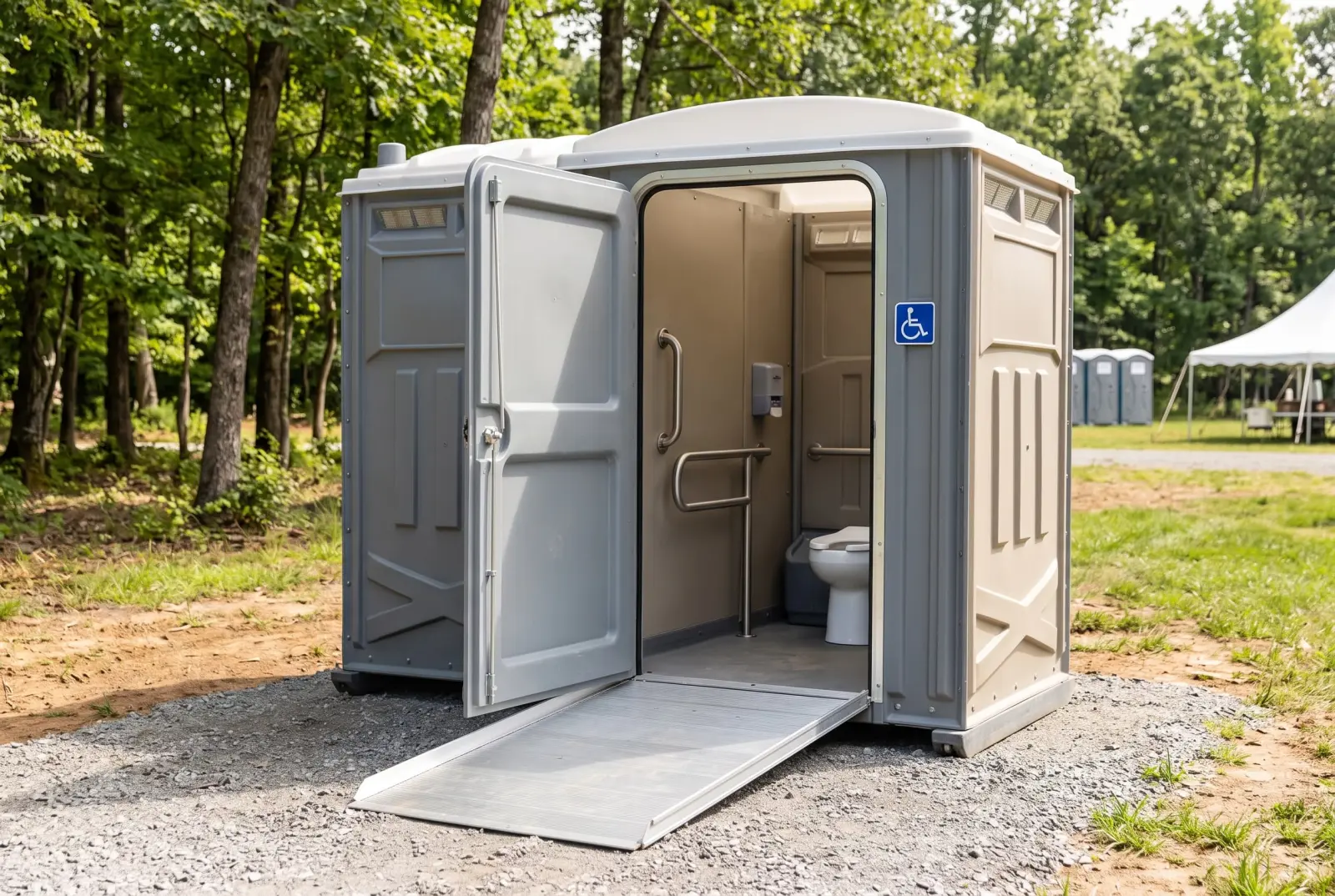
A larger-format unit designed around wheelchair access — more floor space, a wider door, and support features that a standard unit doesn't have room for.
What's Different About an ADA Unit
An ADA accessible portable toilet is built with a noticeably larger footprint than a standard unit so a wheelchair can enter and turn around inside. Typical features include:
- A wider door opening than a standard unit
- Expanded interior floor space for a wheelchair turning radius
- Grab bars mounted near the seat
- A ramped or no-step (flush) threshold for easier entry
- A seat height positioned for wheelchair transfers
- The same basic sanitation setup as a standard unit (non-flushing holding tank), though flushable ADA units are also available from some providers
Because of the larger interior, ADA units also tend to be easier for parents with strollers, people using walkers, or anyone who simply prefers more room.
Who Typically Needs One
ADA accessible units are commonly required or expected at:
- Publicly permitted events (festivals, fairs, races, concerts)
- Job sites and workplaces with accessibility obligations
- Events on public property or receiving public funding
- Any gathering that's open and marketed to the general public
Exact requirements — how many accessible units you need relative to total unit count — depend on your local permitting authority, venue, and event size, and can vary by jurisdiction. This page is general planning information, not legal advice; confirm your specific obligations with your city or county permitting office before finalizing your restroom plan. Our ADA rental service page covers how we help customers plan around these requirements.
Planning for Larger Events
For festivals and large public events, ADA units are typically planned alongside your full restroom count rather than as an afterthought. Our festival and large event guide walks through overall unit counts, layout, and accessibility placement for bigger crowds.