Emergency & Disaster Relief Porta Potty Rental
When plumbing goes down after a storm, outage, or water main break, portable restrooms can bridge the gap until normal facilities are back online.
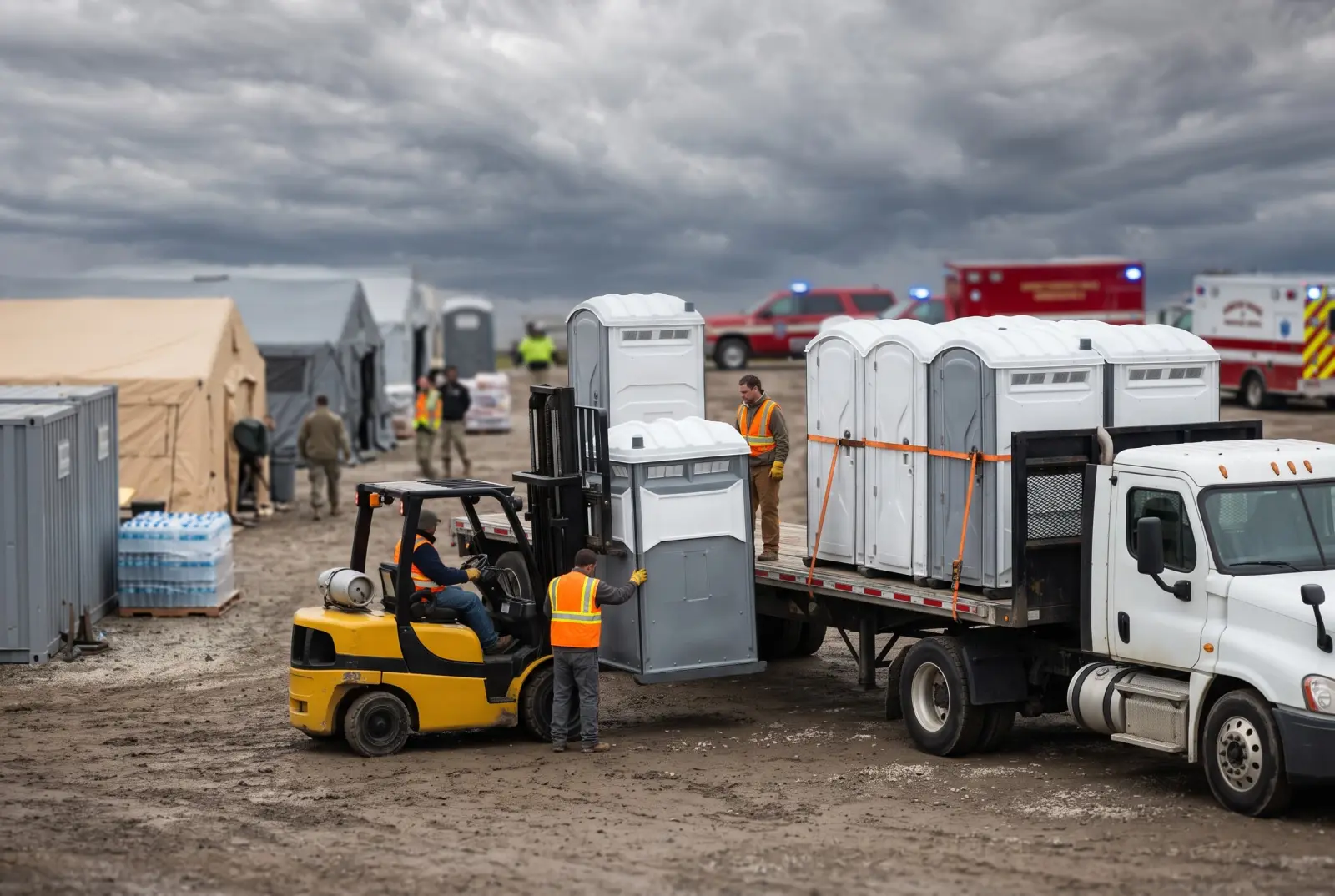
What Emergency Rental Covers
Emergency and disaster relief rentals respond to situations where normal restroom access has been lost, including:
- Storm damage that has knocked out plumbing or water service to a building
- Extended utility outages affecting water or sewer systems
- Water main breaks affecting a building, block, or neighborhood
- Temporary housing sites, shelters, or staging areas set up during disaster response
- Property managers needing interim restroom access while repairs are underway
Rush Deployment — What to Expect
We coordinate with local providers to get units out as quickly as possible when plumbing failures or disaster conditions create an urgent need. That said, rush deployment is availability-dependent rather than a guaranteed instant-dispatch service — response time is affected by how many units and drivers your local provider has free in the area, road conditions, and how many other emergency requests are being handled at the same time, especially during a widespread event like a regional storm. The most useful thing you can do is call as soon as the need is identified and be upfront about the urgency, site access, and expected duration so we can give you an honest read on availability and timing.
Coordinating With Property Managers & Emergency Management
Emergency requests come from a mix of sources: an individual property owner or manager dealing with a plumbing failure, or a coordinated request tied to a local emergency management response covering multiple sites. In either case, having a clear point of contact, site address, and access instructions ready speeds up delivery — especially at sites with restricted access or ongoing repair work.
Temporary Housing & Shelter Support
Disaster response often includes temporary housing sites, shelters, or staging areas that need restroom capacity added quickly and sometimes scaled up as more people arrive. These situations are typically handled more like a short-notice version of long-term rental planning — unit counts based on expected occupancy, with servicing scheduled to match actual use once the site is operating.
What to Have Ready When You Call
- Site address and the best access point for a delivery truck
- An estimate of how many people need restroom access
- Whether the situation is expected to last days or longer
- A point of contact who can meet the driver or coordinate placement
See our disaster relief planning guide for more detail, and our pricing guide for how emergency and rush requests are typically priced.
A Typical Emergency Request
Suppose a water main break leaves a mid-size apartment building without water at seven in the morning. The property manager calls with the address, the number of residents affected, a statement that the repair could take several days, and the location of a side lot where a truck can park. They ask how soon units could be there and whether a hand wash station and an accessible unit are available too. The honest answer depends on local inventory, drivers, and how many other calls are coming in. This is an illustrative scenario, not a promise of response time.
Hygiene, Safety, and Security at Emergency Sites
When people have no normal restroom access, small details matter. Place units away from food areas and sleeping areas where possible, but close enough that children, older adults, and people with limited mobility can reach them. Lighting matters at night, so ask about options and plan a lit path. Pair toilets with hand washing, and consider an accessible unit if the site serves the general public. If a site has access control, identify who will unlock gates for delivery and service trucks.
Questions to Ask Your Provider
- How soon could a unit realistically arrive, and what does that depend on?
- Is there a rush, after-hours, or weekend charge I should know about?
- Who needs to be on site to meet the driver and direct placement?
- Can I add units later if more residents or responders arrive?
- Can a hand wash station and an accessible unit come on the same trip?
- If the first location becomes unusable, can units be moved?
- Can servicing continue on weekends and holidays while the outage lasts?
Emergency Rental FAQs
How fast can portable toilets be deployed in an emergency?
Response time depends on local provider availability, driver capacity in your area, and how many other requests are being handled at the same time. Rush deployment is not guaranteed on a fixed timeline, so call as soon as a need is identified and ask directly about current availability.
What situations call for emergency porta potty rental?
Common triggers include storm damage that knocks out plumbing, extended utility outages, water main breaks, and temporary housing or shelter sites set up during disaster response.
Who typically coordinates emergency rentals?
Requests can come directly from property owners or managers, or through local emergency management coordination during a larger regional response. Either way, providing an accurate site address, access details, and expected duration up front helps speed up deployment.
Might insurance help cover temporary restrooms?
Some property or business policies reimburse temporary facilities after a covered loss, but coverage varies widely. Check with your insurer, and keep your rental paperwork and invoices in case you need them. We cannot speak for any insurance company.
Can a unit go on a public street during an emergency?
Placement on a street, sidewalk, or other public right-of-way usually needs approval from the city or local emergency management. If you are not sure who to ask, begin with your city or county office.
What if roads are flooded or blocked?
Delivery depends on whether a truck can reach the spot safely. Tell your provider about road conditions, closures, and alternate access points, and be ready for the possibility that timing will change.
Can organizations, not just property managers, request units?
Requests can come from property owners, managers, businesses, community groups, or emergency coordinators. Have a single contact person and a precise site address ready when you call.