Construction Porta Potty Rental
Keep your crew productive and your job site compliant with portable toilets sized to your workforce, serviced on a schedule that matches how hard they get used.
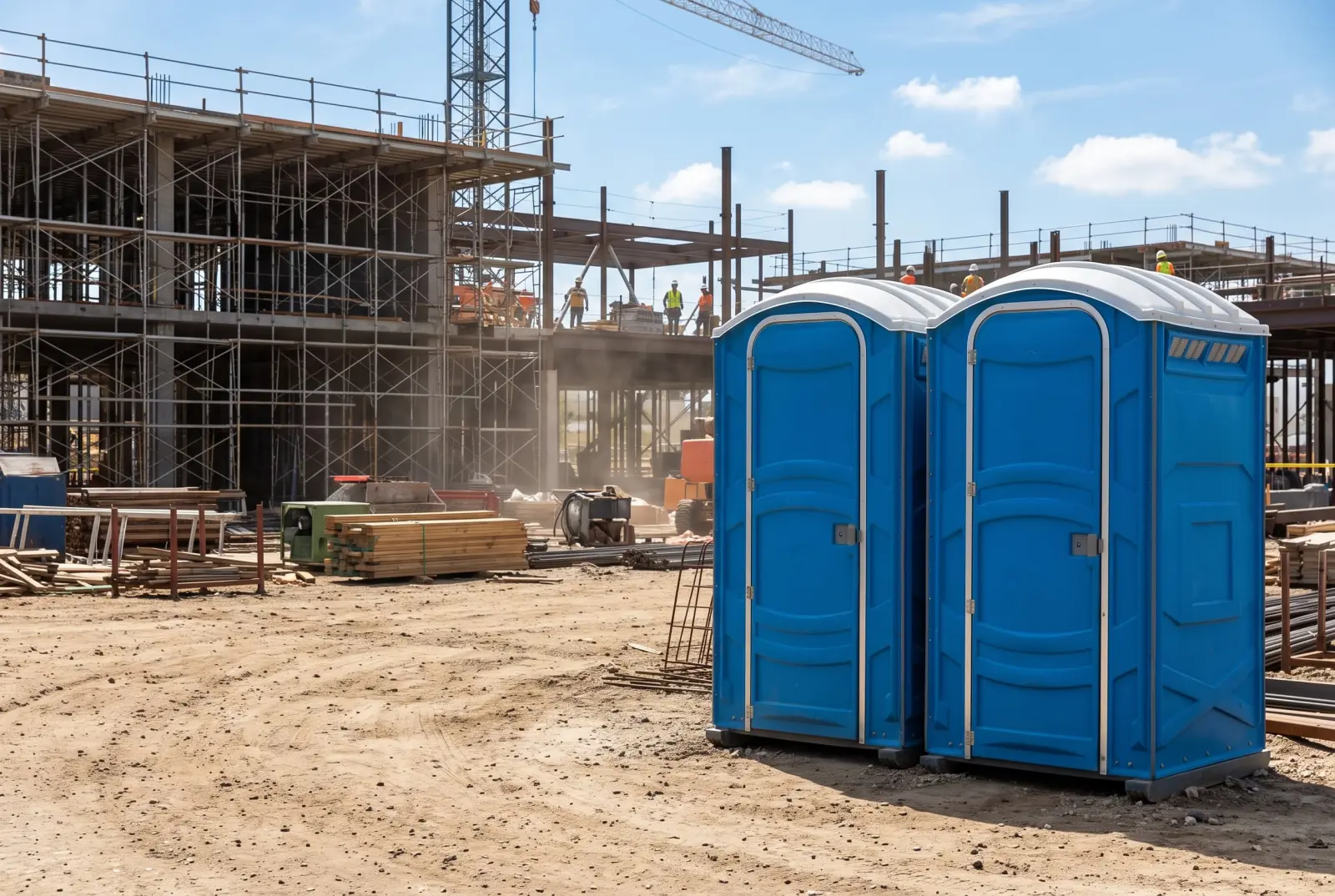
What Construction Porta Potty Rental Covers
Job-site restroom rental is built around one problem: keeping enough working units on-site, in the right spot, for as long as the project runs. That typically means:
- Unit counts based on crew size, shift length, and project duration
- Standard portable toilets as the default unit for most active job sites
- Weekly (or more frequent) pumping, restocking, and cleaning
- Coordination for multiple units across large or multi-phase sites
- Placement planning around equipment, material staging, and site access
- Month-to-month billing for projects that run longer than a few weeks — see long-term rentals
How Many Units Does a Job Site Need?
A commonly cited baseline is OSHA's general sanitation guidance of roughly one toilet per 20 workers on a standard 40-hour work week. In practice, many rental providers recommend planning closer to one unit per 10–20 workers instead of the bare minimum, since it noticeably cuts down on wait times and unit overuse — especially once shifts run longer, crews overlap, or weekend work is added. Confirm the exact requirement that applies to your project with your site safety officer or local jurisdiction, since specific thresholds can vary.
For sites with 50+ workers, spreading units across multiple points on the property — rather than clustering them all in one spot — usually cuts down on walk time and evens out wear on each unit.
Weekly Servicing, Built Around Your Schedule
Most construction rentals run on a standard weekly service visit: pumping, fresh supplies, and a cleaning pass. High-crew-count sites, sites running two shifts, or sites in hot weather often move to a twice-weekly cadence instead. Let your provider know your crew size and schedule up front so servicing keeps pace with actual use — see how it works for how delivery and servicing get scheduled.
Placement on an Active Site
Units need to sit close enough to the work zone that a trip doesn't eat into productive time, but out of the way of forklifts, delivery trucks, crane swing radius, and material laydown areas. They also need a clear path for the service truck to reach them on pumping day throughout the project. Our placement guide covers ground conditions, clearance, and access requirements in more detail.
Pricing Factors
On a job site, the quote tends to move with the number of units you need at peak headcount, how often they are pumped, how long they stay, and how far the site is from the provider's yard. Extras such as a hand wash station, relocating a unit mid-project, or a rush add-on may show up as separate line items. Local providers set their own rates, so use the pricing guide to understand each factor rather than to predict a number.
A Typical Job-Site Request
Picture a general contractor starting a commercial build that will run for several months, with a gated lot and a crane pad along one edge. The superintendent calls with the site address, the start date, an estimate of headcount during each phase, and a note that the gate opens at 6 a.m. From there, the request usually boils down to a starting unit count, a hand wash station near the break area, and a service day that does not collide with concrete pours or material deliveries. This is an illustrative example only; your site, your jurisdiction, and your provider will shape the real plan.
Planning for Phases and Trades
Headcount on a project is rarely flat. Excavation may involve a small crew, framing brings in more trades, and interior finishing can put electricians, plumbers, drywall crews, and painters on site at the same time. Tell your provider when the peak is expected so units can be added ahead of it instead of after complaints start. Also mention if the units will need to move as work shifts, such as from a building pad to a parking area, and share any gate codes or lockbox details so a service truck can get in on days when no one is there to meet it.
Questions to Ask Your Provider
- Is the suggested unit count based on my peak headcount or my average headcount?
- Which day and time window will servicing happen, and can it avoid pours and deliveries?
- How do I add units or request an extra service visit if the crew grows?
- Can a unit be relocated on site, and is a move billed separately?
- What happens if the truck cannot reach a unit on service day because access is blocked?
- Are lighting, locking hardware, or tie-down options available for open or overnight sites?
- Can a hand wash station be delivered and serviced on the same schedule as the toilets?
Construction Rental FAQs
How many portable toilets does a construction site need?
OSHA's general sanitation guidance suggests roughly one toilet per 20 workers, though many rental providers recommend closer to one unit per 10 workers for shorter wait times. Confirm the exact requirement for your project with your site safety officer, and add units as crew size or shift length increases.
How often are job-site units serviced?
Weekly servicing is standard for most construction rentals, which includes pumping, restocking supplies, and cleaning. Larger crews or higher-use sites can move to a twice-weekly schedule if needed.
Where should units be placed on an active job site?
Units should sit close enough to the active work zone that workers can reach them quickly, but clear of equipment travel paths, material staging areas, and any path a service truck will need during the rental period.
Does a construction site need hand washing as well as toilets?
Many job sites pair toilets with a hand wash station or sink, but expectations differ by project type and jurisdiction. Ask your site safety officer what applies to you. A portable station is a simple way to give workers water and soap away from the toilet units.
Can units be moved when the work area changes?
Often yes, but it usually needs to be coordinated with the provider rather than done by the crew, since units can be heavy and may need to be emptied first. Ask whether moves are done during a service visit or require a separate trip.
What if the site is locked or fenced after hours?
Share gate codes, lockbox details, or a contact who can open up on service day. A truck that cannot get in may not be able to complete the visit, and your provider may treat that as a missed service.
Are standard units enough for a multi-trade site?
For most active sites a standard unit is the working default. Add accessible units or hand wash stations where your site rules or the people on site call for them, and consider a nicer unit for any office or visitor area.