Porta Potty Rentals for Construction Site Planning
Job-site sanitation is a compliance basics item, not an afterthought. Here's how unit count, placement, and servicing typically get planned around an active site.
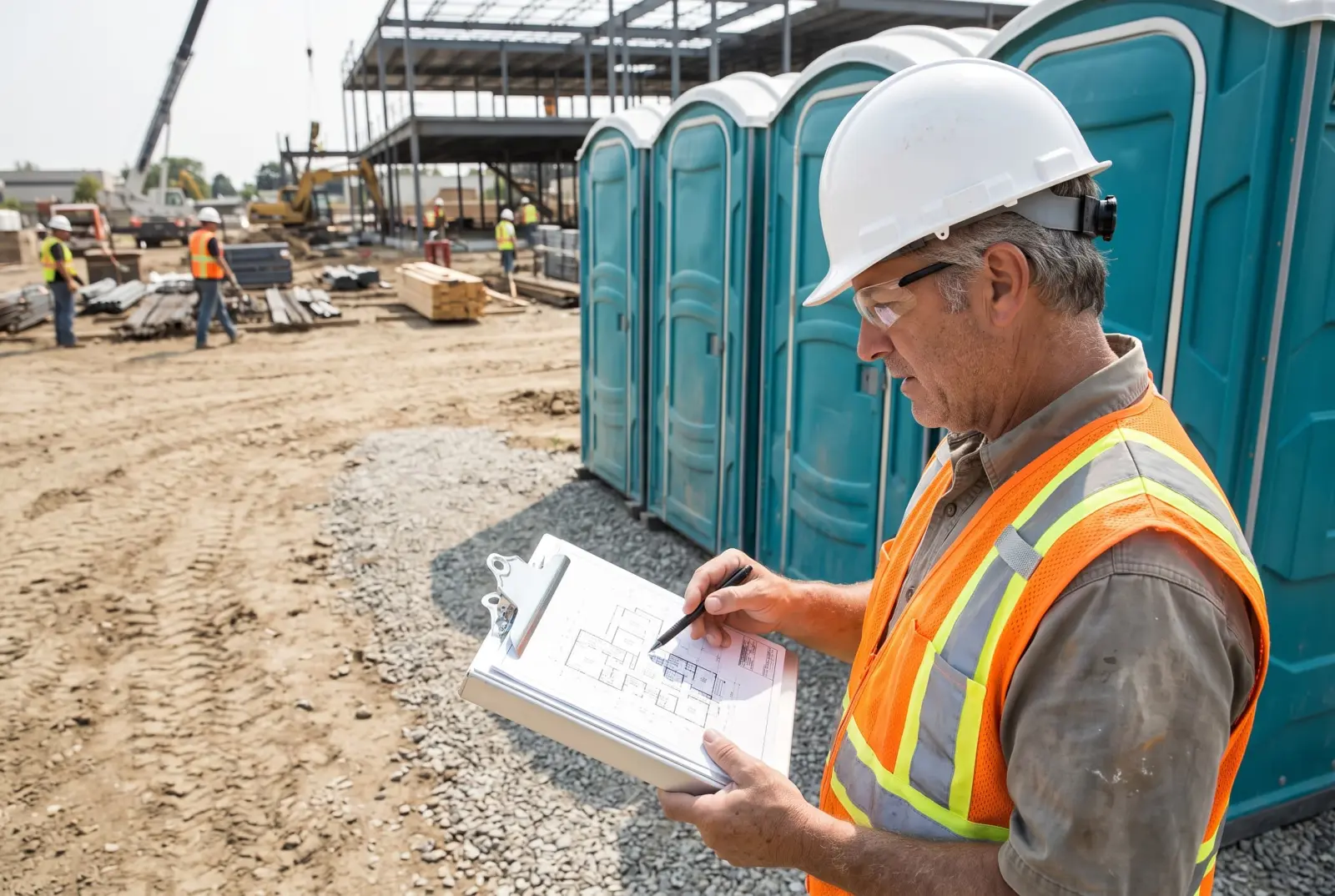
Unit Count Starts With Crew Size
OSHA sanitation rules are the usual starting point for job-site toilet counts, and many state programs add their own requirements. Rules can also differ by project type, crew size, and how long the work lasts. Treat this page as general guidance and confirm current requirements with OSHA, your state agency, or your safety officer before you finalize the order.
Placement That Keeps the Site Moving
Units should be near the active work zone so crews actually use them, but clear of crane swing radius, equipment travel lanes, and material staging. On multi-phase projects, plan for relocation as work moves, and tell your provider early so a unit is not blocking a planned excavation or slab pour.
A Worked Planning Scenario
Imagine a general contractor starting a three-story building with an eight-month schedule. The crew starts small during excavation, grows during framing, and tapers during finishes. Illustrative only, not a quote:
- Mobilization: a small group of standard units goes near the gate, along with a hand wash station by the break area.
- Framing peak: the superintendent checks the headcount against the safety plan and asks the provider to add units and possibly a second location on the far side of the footprint.
- Interior phase: trades move indoors, units move closer to the building entrance, and an ADA unit is added if accessibility rules or the workforce call for it.
- Closeout: units are reduced as the crew shrinks, and the provider is told the pickup date.
The point is that the plan changes through the project. Review it at each phase rather than ordering once and forgetting it.
Planning Timeline
- Before bidding or kickoff: check which sanitation rules apply and who on the team owns the decision.
- Two to three weeks out: request quotes, share the address, access road, and ground conditions.
- One week out: mark drop locations, confirm gate hours, and clear a path.
- Delivery day: walk the site with the driver and confirm unit locations.
- Each phase change: adjust count, location, and servicing frequency.
Actual lead times depend on the local provider and season, so ask when you request the quote.
Servicing and Access
Many job-site rentals are serviced on a recurring schedule, with pumping, cleaning, and restocking. Larger crews or multiple shifts may need more frequent visits. A service truck must be able to reach each unit with its hose, so avoid boxing units in behind fencing, stockpiles, or parked equipment. See the placement and servicing guide for what a visit requires from your site.
Common Mistakes
- Ordering for the first month's crew and never revisiting the count.
- Putting units at the far edge of the site so workers lose time walking.
- Blocking the service truck with a new laydown area.
- Forgetting a hand wash station near food or break areas.
- Not telling the provider about locked gates or site security hours.
- Keeping a relocated unit's old address on the service route.
Seasonal and Long-Term Notes
Winter work may need freeze protection, and summer work usually calls for shade and extra servicing. For projects running months, a long-term rental arrangement may offer a more predictable servicing cadence than repeated short-term bookings. On bigger sites, spreading units across the footprint generally shortens walking time. A hand wash station pairs well with a break area.
Construction Sanitation FAQs
How many portable toilets does a construction site need?
It depends on crew size, project type, and the rules that apply to you. OSHA sanitation requirements are a common starting point, and states may add their own. Confirm with OSHA, your state agency, or your safety officer, then share the headcount with your provider.
Where should units be placed on an active job site?
Near the work zone but clear of crane swing, equipment lanes, and staging areas. The location also needs a clear path for the service truck for the life of the project.
Can units be moved when the work area changes?
Often yes, but ask the provider how relocation is handled and whether it affects cost or scheduling. Give notice rather than moving a unit yourself.
When should I add a hand wash station on a job site?
When crews eat on site, when no running water is available, or when your safety plan or client calls for it. Place it by the break area and near the toilets.