Hand Wash Station Rental
Standalone sink units with their own water supply, added alongside portable toilets wherever proper handwashing matters most.
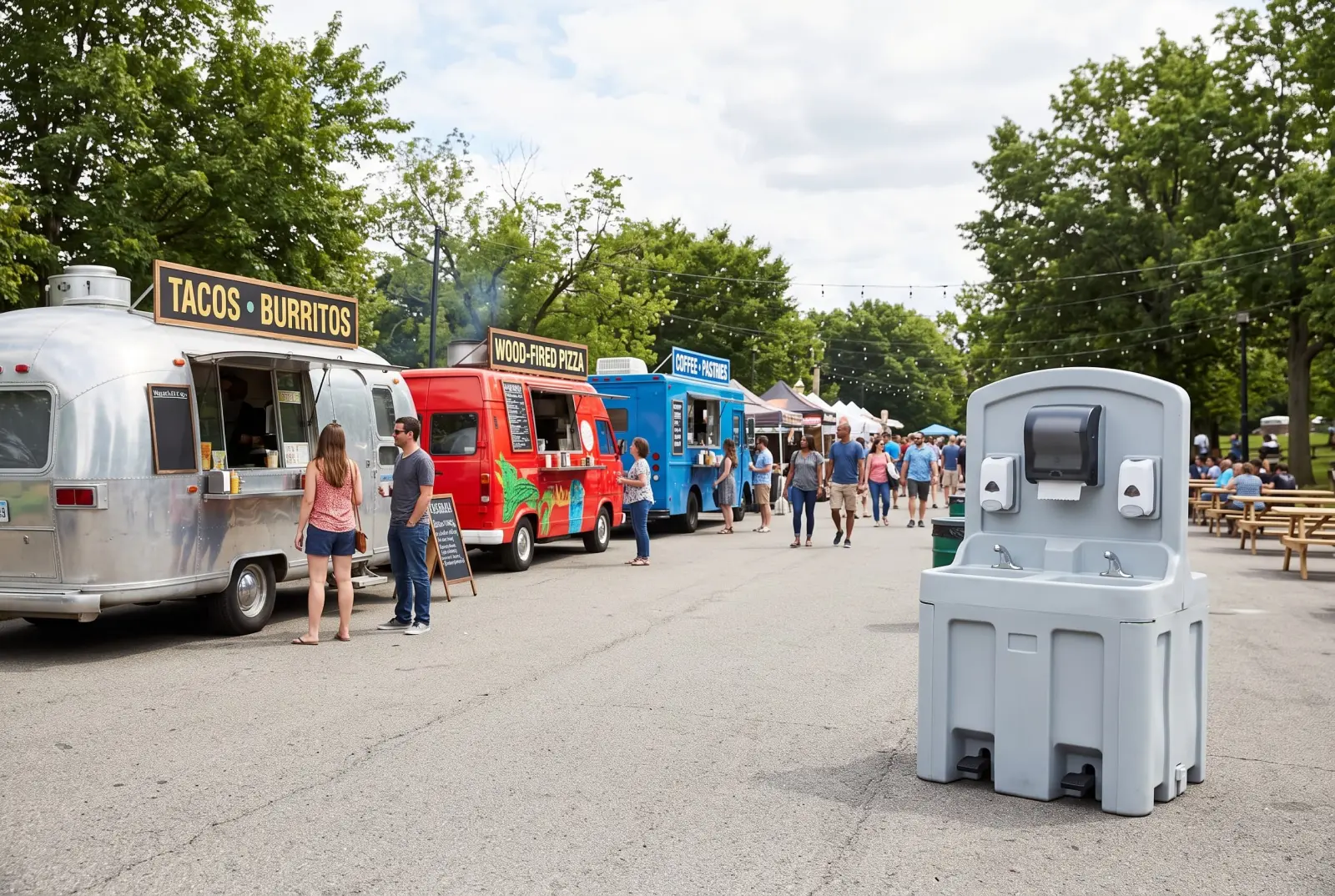
What You're Renting
A hand wash station is a self-contained sink unit — no toilet, no plumbing hookup — with a foot-pump or electronic faucet, its own fresh-water tank, a separate greywater tank, soap, and paper towels. See our hand wash station spec page for the full feature list and footprint; this page covers when you need one, how many, and how it fits alongside your toilet rental.
When You Need One
Hand wash stations are typically added — not used as a replacement for a toilet — wherever handwashing compliance matters:
- Food truck and vendor rows at festivals and markets
- Events subject to local health department requirements
- Construction and industrial job sites, especially during cold and flu season
- Sites following OSHA sanitation expectations for handwashing access
- Farmers markets, fairs, and community events
If your units already include a sink — a deluxe flushable unit or a restroom trailer — a separate hand wash station is usually only needed for a food vendor area away from the main restroom bank, not the whole site.
How Many You Need
A common planning guideline is one hand wash station per 75–100 guests, or one per food vendor cluster, whichever is more frequent — food service areas generally warrant their own dedicated station rather than sharing one across the whole event. See our festival & large event guide for layout planning on bigger crowds.
Pairing With Your Toilet Rental
Hand wash stations are ordered as an add-on alongside your toilet units, sharing the same delivery and servicing visit. Our construction rental page and event & wedding rental page cover how they fit into a typical setup for those situations.
Placement & Servicing
Like a portable toilet, a hand wash station needs a level, stable surface and no hookup — it's refilled and drained on the same visit as your toilet units. See our placement guide for ground and access requirements.
Pricing
Stations are generally a smaller line item than a toilet unit, and the price depends on tank size, how long you keep them, and how often they need refilling. Heavy-use sites or hot days may call for more frequent service. Check the pricing guide for the general factors, and ask your provider for current rates.
A Typical Hand Wash Request
Think of a weekend farmers market with a few dozen vendors, several of them offering food samples. The market manager has been told by the local health office that vendors need access to handwashing. They contact a provider with the market address, the layout, the number of food vendors, and the hours of operation. A provider might suggest one station at each end of the food row and another near the restrooms, with a refill check partway through the day. This is just an illustration; your health department sets its own rules.
Keeping a Station Working All Day
A station only helps if it stays stocked. Each unit has a finite tank of fresh water and a separate tank for used water, plus soap and paper towels that can run out on a busy day. For large crowds, ask how long a tank typically lasts and whether a midday refill is possible. In cold weather, water can freeze, so ask what the provider recommends. Put a sign or cone near the station so it is easy to spot, and place it where people naturally pass after leaving the restroom or before they eat.
Questions to Ask Your Provider
- How large is the fresh-water tank, and how long does it usually last at an event like mine?
- Is the faucet foot-operated, hand-pumped, or electric, and does it need power?
- Are soap and paper towels included, and how are they restocked?
- Who empties the used-water tank, and when?
- Is hot water an option, or are stations cool-water only?
- What is the plan for freezing weather?
- Is an accessible-height version available?
Hand Wash Station FAQs
Do I need a hand wash station if I already have portable toilets?
Standard portable toilets include a hand sanitizer dispenser, but a standalone hand wash station with running water is often expected or required for food service areas and events subject to local health department rules. Deluxe flushable units and restroom trailers already include a sink, so a separate station is usually only needed alongside standard units.
How many hand wash stations do I need?
A common planning guideline is one hand wash station per 75–100 guests, or one per food vendor cluster, whichever is more frequent. Larger festivals often place stations near both restroom banks and food vendor rows.
Do hand wash stations need a water or power hookup?
No. Hand wash stations carry their own onboard fresh-water supply and a separate greywater holding tank, so they work anywhere a portable toilet would without any plumbing or electrical hookup.
Do portable hand wash stations provide hot water?
Many provide cool or ambient water, though some models offer heated options. If warm water matters to you or your health office, ask about it when you book.
Can I rent a hand wash station without a toilet?
Often yes, particularly for vendor rows, workstations, and picnics, but policies differ by provider. Confirm that a station alone can be delivered and serviced.
Is hand sanitizer a substitute for a sink?
Not always. Some health departments or workplace rules require water and soap, particularly around food handling. Ask your local office what applies before you settle on sanitizer alone.
Where should a hand wash station go?
Near the exit of the restroom area and at the entrance of food service areas, on level ground. Avoid spots where used water could pool near walkways.