Porta Potty Rentals for Festivals & Large Events
Large public events put more strain on restroom capacity than a private gathering of the same size. Here's how unit count, ADA compliance, and layout typically get planned for festivals and other high-attendance events.
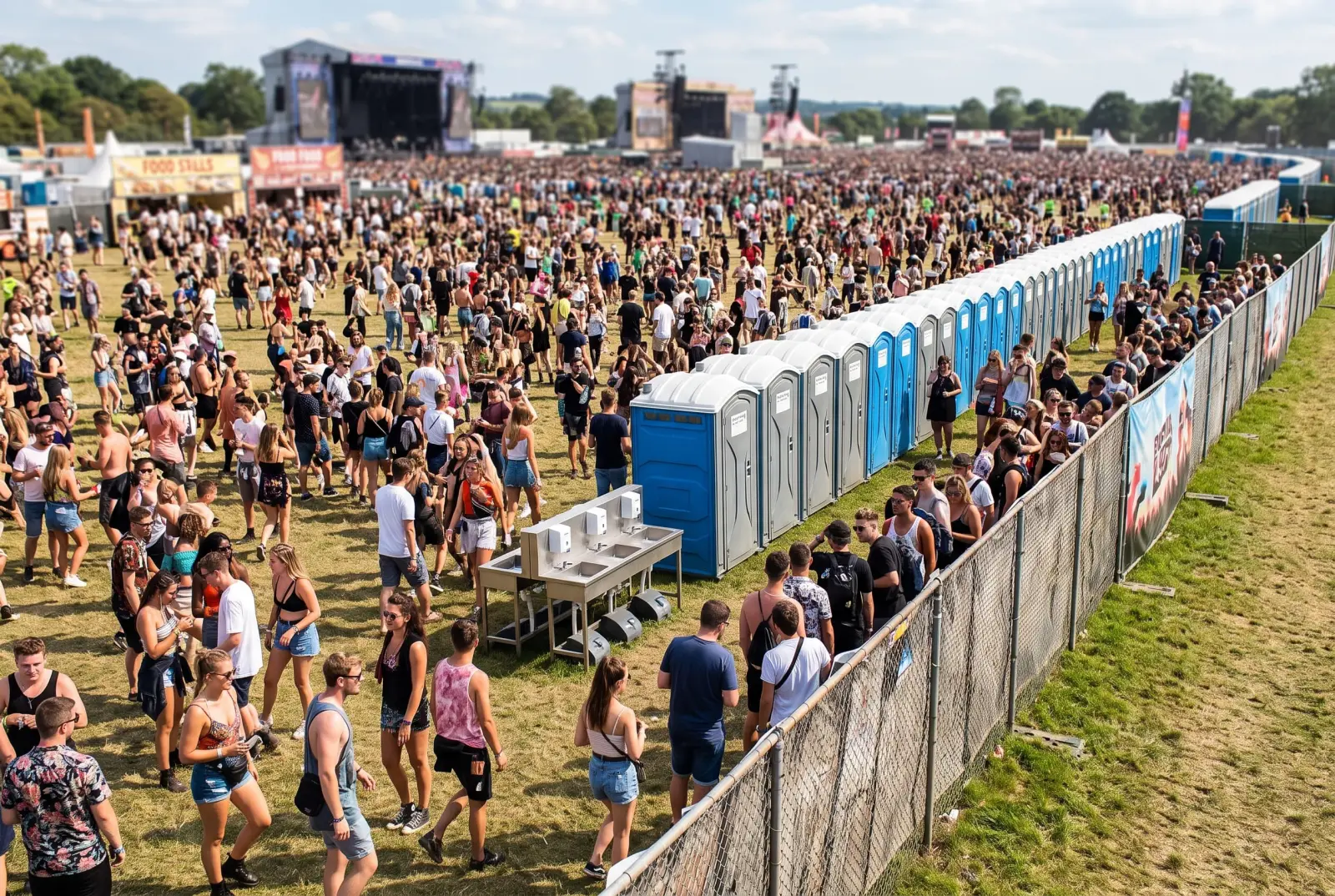
Why Large Events Need More Units Per Guest
Festivals tend to have higher guest density, concentrated peak times, and alcohol service, all of which raise restroom use compared with a private party of the same size. Lines also form at intermissions, between acts, and at the end of the night. Rely on your provider's experience with similar events and your permit office's requirements rather than a single formula.
A Worked Planning Scenario
Consider a two-day neighborhood music and food festival in a city park, with a main stage, a food truck row, and a beer garden. Illustrative only, not a quote:
- Zones: the organizer maps the park into stage area, food row, beer garden, and entrance. Each zone gets its own restroom bank instead of one big cluster.
- Mix: standard units form the bulk, deluxe units go near the VIP area, hand wash stations sit at the food row and beside each restroom bank, and ADA units are spread across zones.
- Peak risk: the beer garden and stage are the busiest, so the organizer asks the provider to weight units toward those areas.
- Between days: servicing is scheduled overnight when the grounds are clear.
- Backups: the organizer asks how to reach the provider during the event if a unit needs attention.
Planning Timeline
- Early planning: confirm the permit office's sanitation and accessibility requirements and the health department's vendor rules.
- Several weeks out: request quotes with attendance, hours, alcohol service, and a site map. Busy weekends can sell out, so book early.
- One to two weeks out: finalize drop spots, vehicle access, and gate hours, and confirm servicing windows.
- Day before: walk the grounds with the provider or driver if possible.
- During: assign a staff member to monitor lines and report problems.
- After: schedule pickup and check the site.
ADA Minimums for Permitted Events
Permitting authorities often require a minimum number of ADA accessible units, but the formula varies by city and county. Confirm the requirement with your permit office early and keep ADA units on firm, level, signed routes.
Hand Wash Stations
Vendors usually need handwashing near their booths, and the health department may specify what. Confirm with the local health department, then plan hand wash stations at the food row and restroom banks.
Layout and Emergency Access
Keep restrooms off fire lanes, emergency vehicle routes, and accessible paths. Leave room for queues so lines do not block walkways, and do not place banks where wind carries odor toward food or seating. Lighting matters after dark. See the placement and servicing guide for site requirements.
Common Mistakes
- Putting all units at one end of the grounds.
- Ordering for average attendance rather than peak crowds.
- Skipping a servicing plan for multi-day events.
- Leaving ADA units until after the main order.
- Not telling the provider about stage load-in, fencing, or road closures.
- Overlooking cold or wet weather effects on water-based units.
Festival & Large Event FAQs
Do festivals need more restroom units per guest than a private party?
Usually yes. Higher density, concentrated peak times, and alcohol service can increase usage per guest. Ask your provider to size the order for similar public events, and check your permit requirements.
How many ADA-accessible units does a permitted public event need?
Permitting authorities often set a minimum based on total unit count or attendance, but the number varies by jurisdiction. Confirm with your local permit office and share it with your provider.
Should restrooms be in one bank or spread out?
Spreading them across zones near the stage, food, and entrances usually reduces long walks and queues, as long as every location is reachable by the service truck and clear of emergency routes.
What is the best time to service units at a multi-day festival?
Typically when the grounds are clear of attendees, such as overnight or early morning. Confirm timing, access, and any midday check with your provider before the event.